

Someone in Raleigh orders an air fryer on a Tuesday. It arrives Thursday. On Friday they open the box, decide it is too big for the counter, and click Return. That is the whole story from their side: two minutes and a prepaid label. From the air fryer’s side it is only beginning. It is about to pass through four buildings, one spreadsheet and three sets of hands before anybody cooks anything in it.
The click that starts it
The first thing worth knowing is why people send things back. Rarely because the product was broken. Most return reasons are a version of changed my mind: it was bigger than it looked, the wrong colour, a cheaper one turned up two days later, or they ordered two sizes and always meant to return one.
Faulty products are a real category and we will come back to them, but they are the minority. The pile of returns sitting in a warehouse right now is mostly working merchandise that somebody looked at once. Retailers take back billions of dollars of merchandise a year, and most of that value is not damage. It is indecision.
Why it does not just go back on the shelf
The air fryer arrives at a returns center, gets scanned, and does not go back into stock. The customer has already been refunded, so the item has to be dealt with, and restocking it is usually the most expensive option on the table.
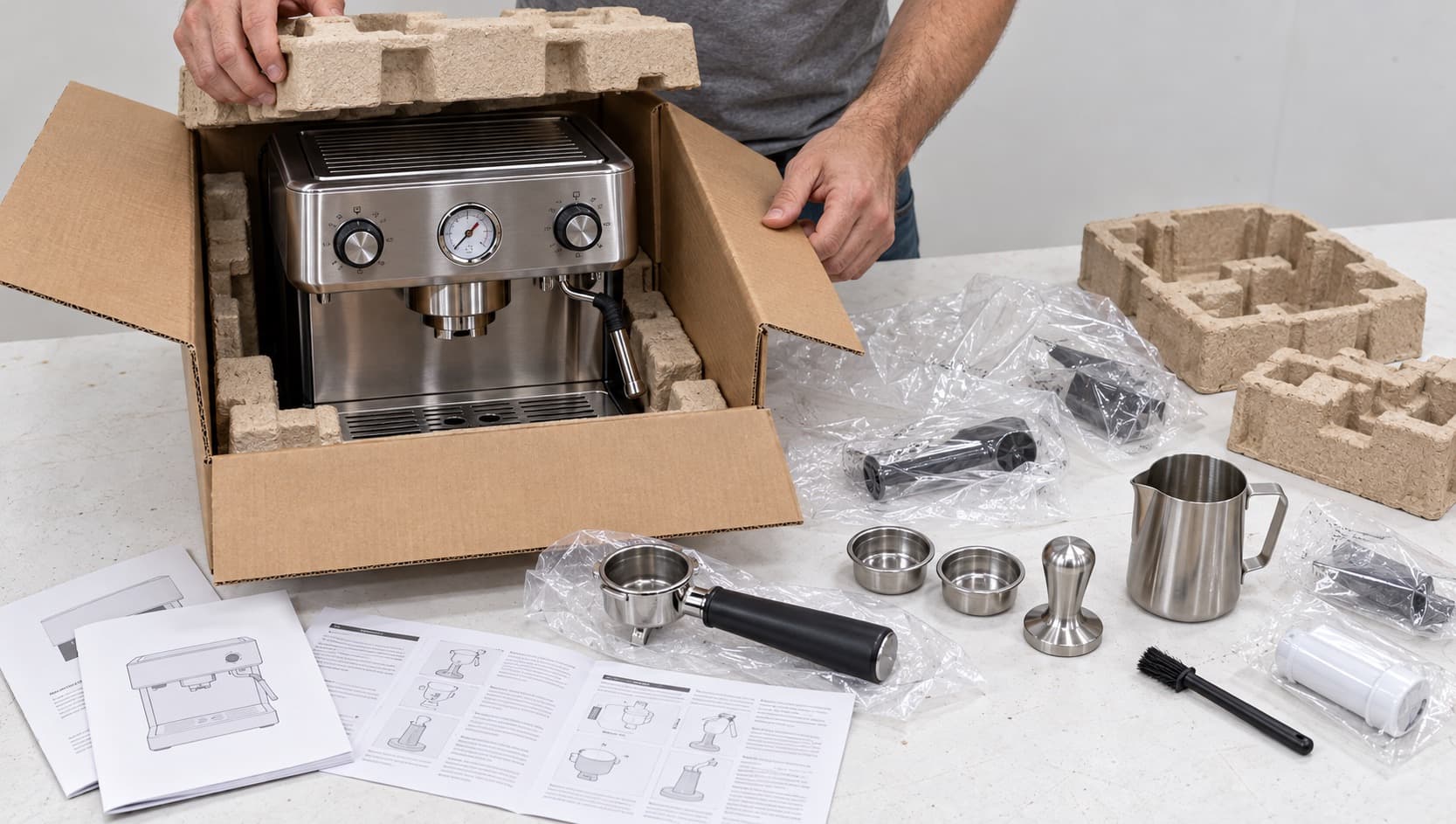
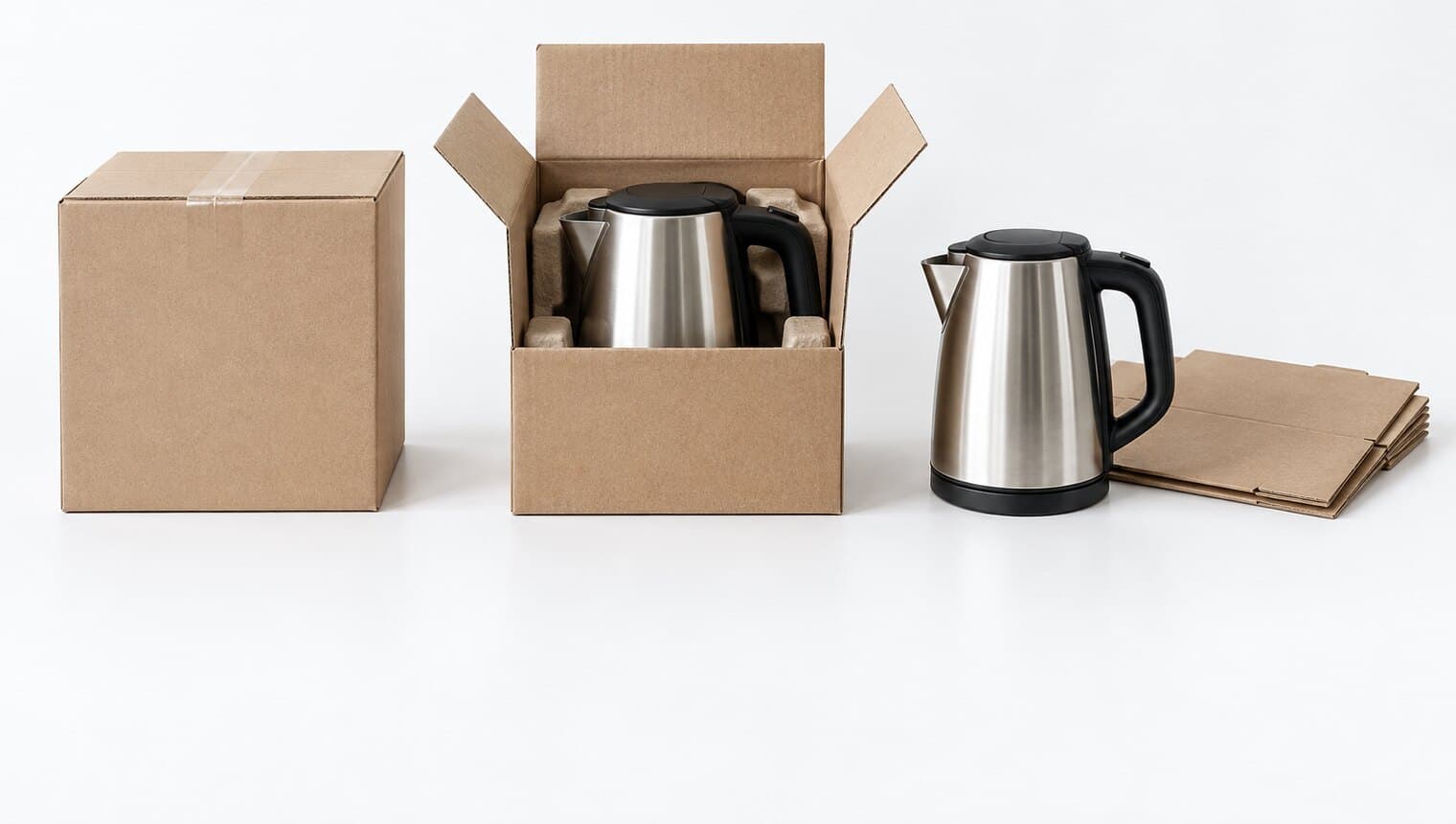
The box has been opened, so it cannot be sold as new. Somebody has to unbox it, confirm the accessories are there, check that it powers on, clean it, repack it and photograph it. That is a stretch of skilled attention on one unit, in a building designed to move thousands of units an hour. Multiply it by every returned kettle, lamp and pair of headphones and the arithmetic stops working.
Time makes it worse. Returns arrive in a wave after the season that produced them, exactly when the shelf space is needed for the next thing. So the default is to clear the building, and the fastest way to do that is to sell what is in it in bulk.
Sold by the pallet, described by one line
Our air fryer is now on a pallet with a few hundred unrelated things: a baby monitor, nine phone cases, a weighted blanket, a cordless drill. The pallet joins a truckload, and the truckload is sold through liquidation channels to whoever buys it. Those channels exist because a retailer would rather find one buyer for a truck than ten thousand buyers for ten thousand items. How liquidation actually works goes deeper on this step.
What travels with the truck is a manifest: a spreadsheet with one row per unit. The row says what the thing is, more or less. A product name, sometimes a retail price, sometimes a code. What it says about the condition of that unit is close to nothing, and the little it does say was written by someone who had a few seconds, not by someone who opened the box.
So the buyer of that truck is buying a list of names. Whether row 412 is a sealed air fryer or an air fryer missing its basket is a question the spreadsheet cannot answer. Everything that makes a resold item a great buy or a bad one lives in that gap, and somebody has to close it by hand. Most resellers do not: they pass the pallet along and let the gap be your problem.
What happens when the box reaches us
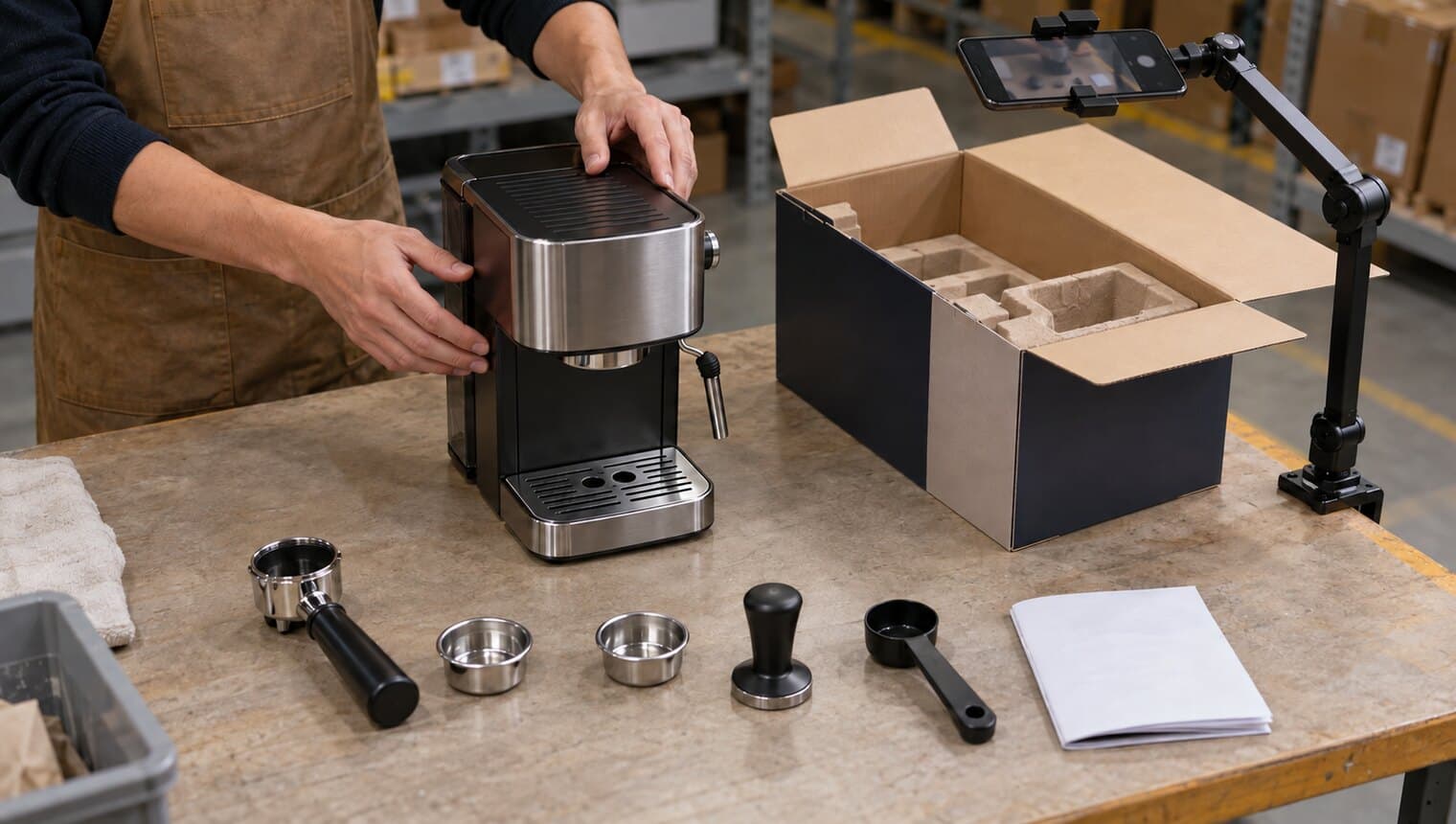
Our warehouse is south of Charlotte, and this is where the air fryer stops being a row in a spreadsheet. The pipeline is deliberately unglamorous:
Open the box
Every single one. The unit comes out, gets checked against its manifest line, and we find out what we actually bought, which is often a unit nobody ever unsealed.
Photograph the actual unit
Not a stock image of the product. This air fryer, on our bench, including the scuff on the back corner if there is one.
Score the five facets
A technician scores cosmetic, functional, completeness, cleanliness and packaging, each with a word rather than a number, and writes a note about anything worth naming. Any score of 3 or lower has to carry a photo of that exact thing.
Price it against today’s retail
The product’s current retail price, not an inflated list price, comes down by its category’s percentage and then by a set amount for each facet below perfect.
Deliver it
To your door across the Charlotte area within 3 business days, with tracking by email. A flat rate per item by size, free once the cart passes the threshold shown on the page.
That is the whole trick. We are not better at buying trucks than anyone else. We do the few minutes per unit the returns center could not afford, once, so nobody downstream has to guess.
The three kinds of return
By the time a unit reaches our bench it is almost always one of three things, and the scores sort them apart immediately.
- Never opened. Refused at the door, or returned before the tape came off. Packaging scores Factory sealed and cosmetic scores No marks, so almost nothing comes off the price for condition. Dull to inspect, which is the highest compliment we have.
- Opened and fine. The commonest case by a distance. Cosmetic is No marks or Faint marks, functional is Fully works, packaging is Retail box, clean or Retail box, worn, and completeness depends on whether everything made it back into the carton. The price moves down mostly for the box and the broken seal, which is the discount people are really shopping for.
- Actually faulty. It came back because it does not work, or part of it is gone: functional scores Partial function, Major fault or Dead, or completeness scores Missing a core part. The price drops a long way and the fault is named in the inspector’s note. A major fault, a crack or a missing core part means the unit is marked Final sale before checkout. Units that fail our bar entirely are donated rather than sold.
None of those three is a label we print. We print the five scores, and you can tell which one you are looking at in two seconds. How to read a condition report walks through every word on the scale.
What “online return” does and does not mean here
What it means: the unit was bought from a major online retailer by a customer who sent it back, and it reached us through liquidation channels that sell retailer return and overstock inventory in bulk. Returns from the largest online retailers are the bulk of what we get. It is a statement about where the merchandise came from, not a claim about its condition.
What it does not mean: that we are the retailer, that we work with the retailer, or that we have any relationship with them at all. We are an independent reseller in Charlotte, buying through the same wholesale channels any reseller can buy through. Nobody at a retailer approves our listings, backs our descriptions or handles your return. We do.
It also does not mean the strikethrough price is a marketing number. The retail figure we compare against is the product’s current retail price, refreshed every few days, so when retail falls the comparison falls with it. A discount measured against a price nobody charges anymore is not a discount.
Why the trip ends in a price you can check
Every stop on this route adds uncertainty, and uncertainty is what makes resold goods feel risky. Whoever sells you a sealed pallet is paying you a discount to find out for yourself. We take that step off your side of the transaction.
One person opened this unit, scored it five ways, photographed the flaw and wrote down which corner it is on, and the price was built from those scores. If we got any of it wrong, tell us within 3 days of delivery and the return is a full refund. That covers anything not as described. It does not cover a change of mind, and it does not apply to a Final sale unit, which named its fault before you bought it.
The short version
A return gets refunded, scanned and cleared out of a building that cannot afford to inspect it, then travels in bulk with a spreadsheet that barely describes it. Somebody has to open the box and tell the truth about what is inside. That is the job we took, and it is why a unit reaches a Charlotte doorstep with a photograph, five scores, an inspector’s note and a price built from all three.