
Liquidation sounds like a going-out-of-business sign in a window. It is not. It is a routine, permanent part of how retail works, running quietly behind every free returns policy you have ever used. Retailers take back billions of dollars of merchandise a year, and almost none of it goes back on the shelf you took it from. Here is where it actually goes, because once you know the path you can tell a real deal from a gamble.
What a return actually is
Somebody orders a thing, changes their mind and ships it back. The box arrives at a returns center, gets a quick glance and a code from whoever opens it, and joins a pile.
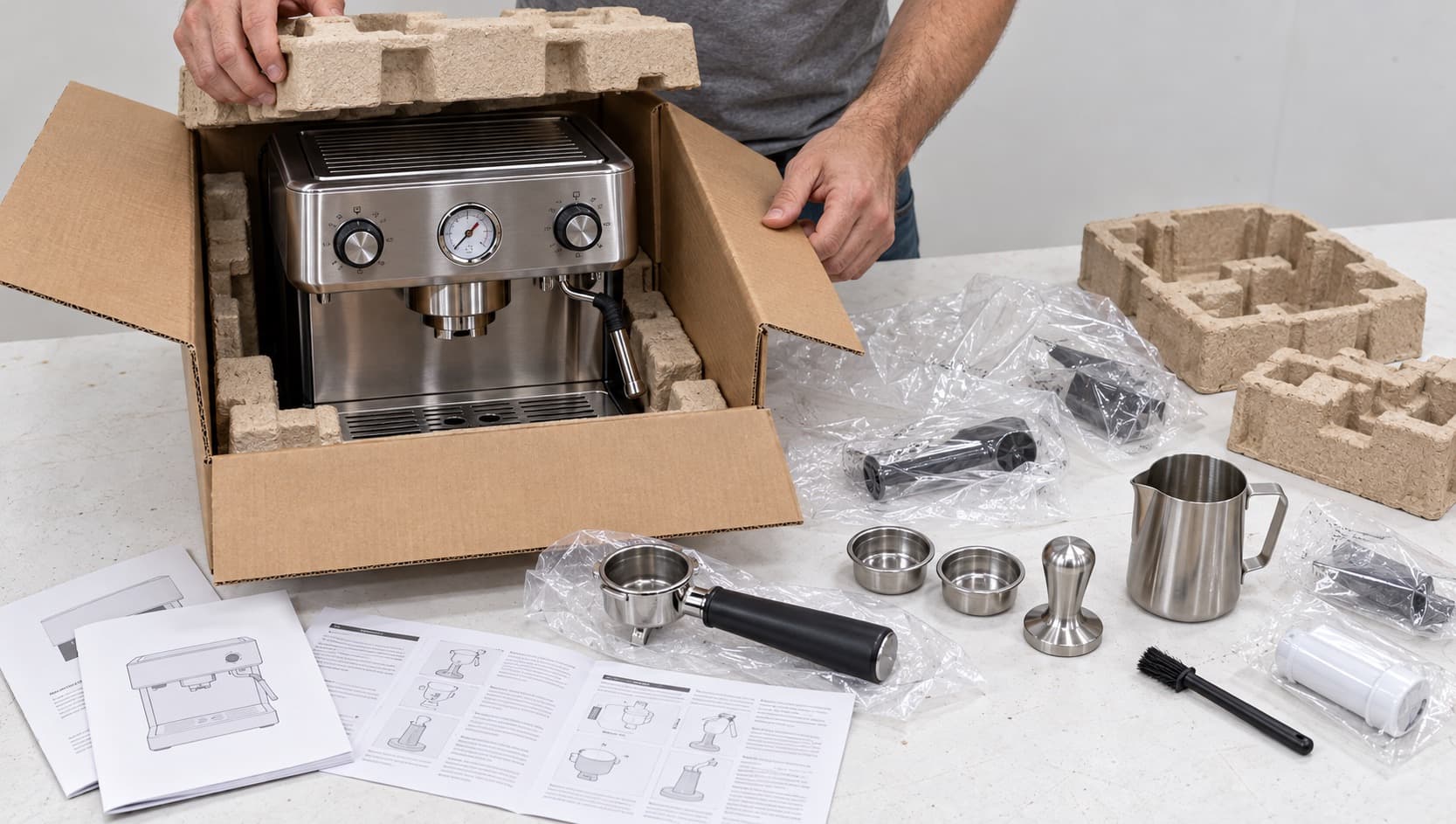
What that pile contains is less dramatic than people assume. Most returns are fine, and a good share were never opened at all: the wrong colour, the wrong size, a gift that was already owned. A second group is open box, sent back within days and sometimes never used. A few are genuinely broken or missing a cable. Three boxes on our bench this morning: one factory sealed, one opened and repacked crooked with every accessory present, one with a cracked lid. Same pallet, same manifest line, three different stories.
Why the box does not go back on the shelf
Once a box has been opened, a retailer cannot sell it as new, and selling it as anything else means somebody has to test it, count the parts, clean it, repack it and write an honest description. That is a person’s time per unit, and at a national retailer’s scale that time costs more than the item is worth to them.
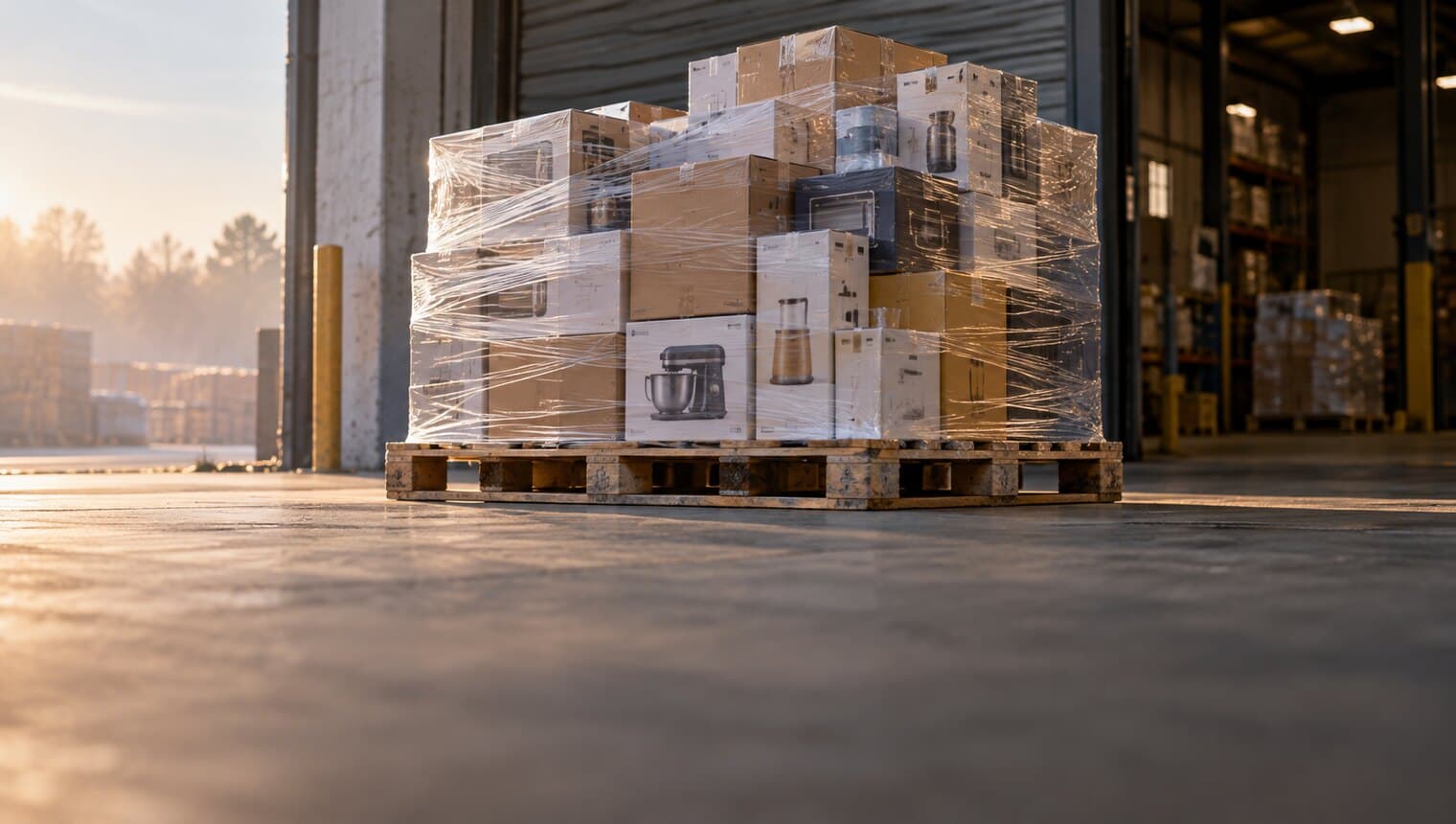
So the pile moves out of the building instead, which is why returns and overstock stack up by the pallet, brand-new items mixed in with the dented ones. Perfectly good products, sitting in a warehouse, in the way.
By the pallet and the truckload
Retailers sell that inventory in bulk through liquidation channels: wholesale marketplaces and brokers whose business is moving quantity, not units. You do not buy an air fryer there. You buy a pallet that is supposed to hold a few dozen small kitchen appliances, or a truckload of pallets, as one lot at one price.
The terms are the same everywhere. The lot is sold as-is, nobody opens it for you, and it arrives shrink-wrapped and unsorted, the way every reseller receives it. From the moment it leaves the dock, every question about what is inside is yours to answer. That is the deal buyers accept in exchange for the price.
What a manifest is, and what it is not
Most lots come with a manifest: a spreadsheet of what the pallet is supposed to hold. One row per unit, with a product name, a retailer identifier, a quantity, a retail price, and usually a short condition code entered by whoever processed the return.
A manifest is genuinely useful. It is how a buyer judges whether a lot is worth buying at all, and it is the first thing we import when a truck arrives. But read carefully what it is: a claim about contents, not a report about condition. The row says one 6-quart air fryer at a retail price. It does not say the basket is missing, the lid is cracked, or the box holds a different model entirely. Sometimes the row is simply wrong and the unit is not on the pallet.
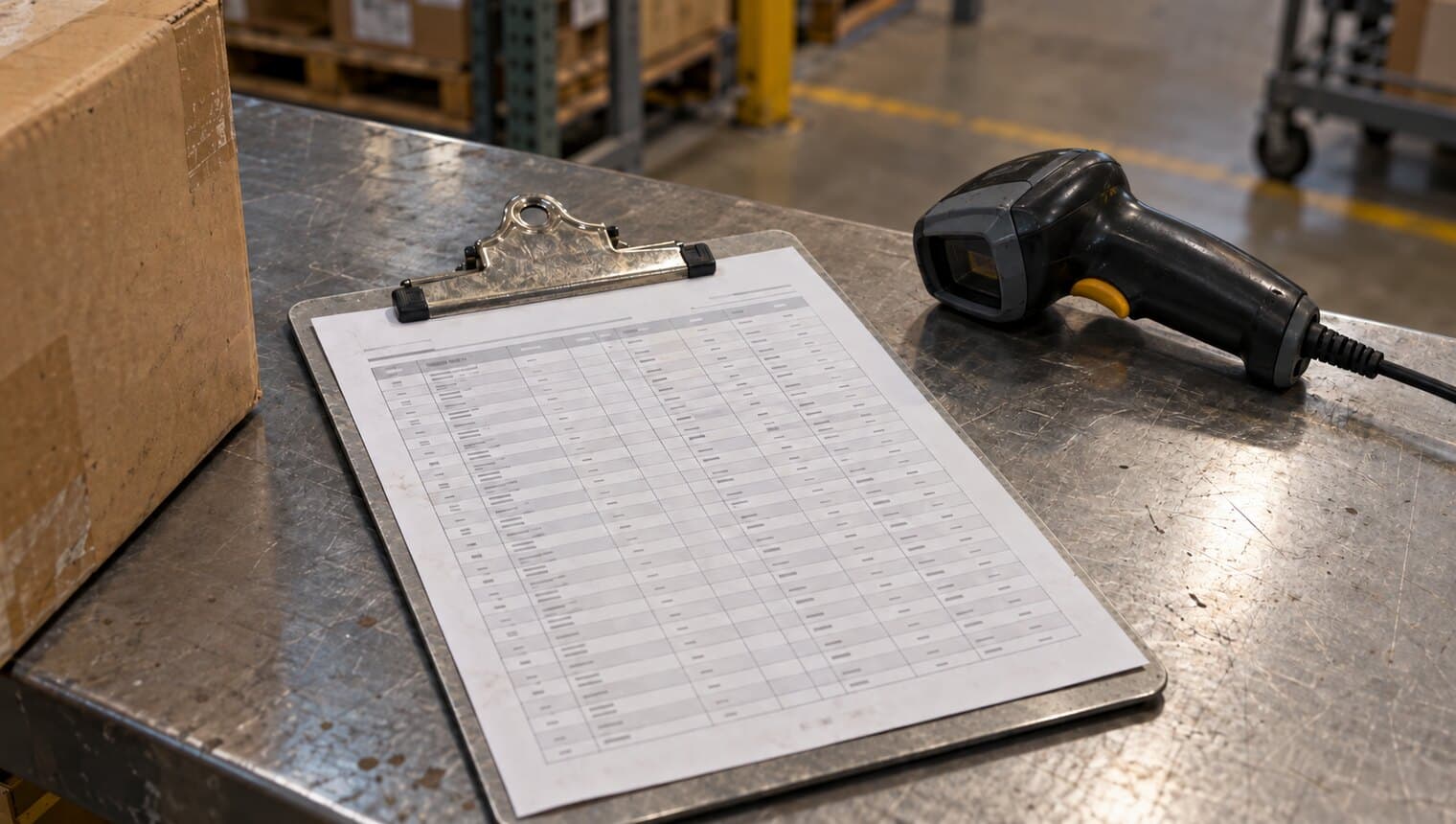
This is the gap the whole industry lives in. A condition code typed in seconds at a returns counter is not an inspection. Every honest claim about a specific unit has to be made by somebody holding that unit.
Overstock is a different story
Returns and overstock travel the same channels and often sit on the same pallet, but they are not the same thing. Overstock is inventory a retailer ordered too much of. Nobody used it and nobody returned it, the shelf space simply ran out, so it moves through liquidation instead.
| Comparison | Returns | Overstock |
|---|---|---|
| Why it left the retailer | A customer sent it back | Too much was ordered, the shelf space ran out |
| Has anyone used it | Sometimes, often not | No |
| Usual packaging | Opened, repacked, sometimes taped | Often still factory sealed |
| What to check first | Completeness and function | That it really is sealed, and the retail price |
Overstock is why an item was available, not a condition of its own. A sealed overstock blender and a sealed returned blender look identical on a shelf, which is why we score the unit rather than the story.
Who buys these lots
Three kinds of buyer, roughly, and what separates them is how much work they do before you see the item.
- Resellers. Individuals and small shops who buy a pallet, keep the obvious winners and move the rest on. Many never open everything, so the manifest line becomes the product description and the risk passes straight to the buyer.
- Auction houses and bin stores. They re-sell the lot in smaller pieces, often unopened, and let a crowd price the uncertainty. The buyer carries the risk of the box being empty, and pays a premium and fees on top of the winning bid.
- Operations like ours. We buy returns and overstock from major retailers by the truckload through the same channels, then break the pallets down and do the part the others skip. We are an independent reseller south of Charlotte, North Carolina. We are not affiliated with any of the retailers whose returns we sell, and we do not claim to be.
What we do differently
The short version: we turn a pallet into facts. Every unit goes through the same five steps before it can be bought.
Open every box
The unit comes out, the accessories are counted, and what we find is checked against the manifest row rather than copied from it.
Photograph the actual unit
On a bench, under even light, including the scuff if there is a scuff. Never a stock image standing in for the real thing.
Score five condition facets
A technician scores cosmetic, functional, completeness, cleanliness and packaging and writes a note. Anything scored low carries a photo of that exact thing.
Price against current retail
The retail price today, reduced by its category and then by every facet that scored below perfect. No inflated list price to measure the discount against.
Deliver it
To your door across the Charlotte area within 3 business days, with tracking. No pickup counter, no appointment.
So the manifest row that said one air fryer becomes a listing that says: this unit, these photos, basket present, faint marks on the lid, retail box worn, at this price. For the detail of how those scores are written and what moves the price, the condition report guide is the reference.
Why the discount exists at all
The usual assumption is that a cheap item must be a broken one. In fact the discount has little to do with the unit and almost everything to do with the retailer’s problem: they want the floor space and the cash back quickly, in one transaction, and will accept far less than retail for both. We buy in bulk, so the cost per item is low before we have done anything to it.
What we add is the work: opening, checking, photographing, scoring, cleaning, packing and delivering. The saving that survives all of that is what you see on the listing, measured against what the item sells for at retail today rather than a list price nobody pays.
What happens to the ones that fail
Not everything on a pallet is sellable, and we would rather take the loss than pass it to you. Units that fail our bar are donated, or recycled when nothing can be done with them, rather than quietly listed with a vague description and a low price.
Some units have a real fault and are still worth owning: a monitor with a cracked stand and a perfect panel, a speaker missing a cable you already have. Those are priced to match and marked Final sale, with the reason named on the listing. Everything else carries the 3-day condition guarantee: if a unit is not as described, tell us within 3 days of delivery and we refund it in full.
The short version
Returns are mostly fine. Retailers would rather have the space than the margin. Pallets move in bulk with a manifest that counts boxes instead of judging them, and somewhere down the line a person either opens the box or sells you the guess. Bidvana is a bet that shoppers prefer the first one, and if you want the argument against the alternative, we wrote that one too.