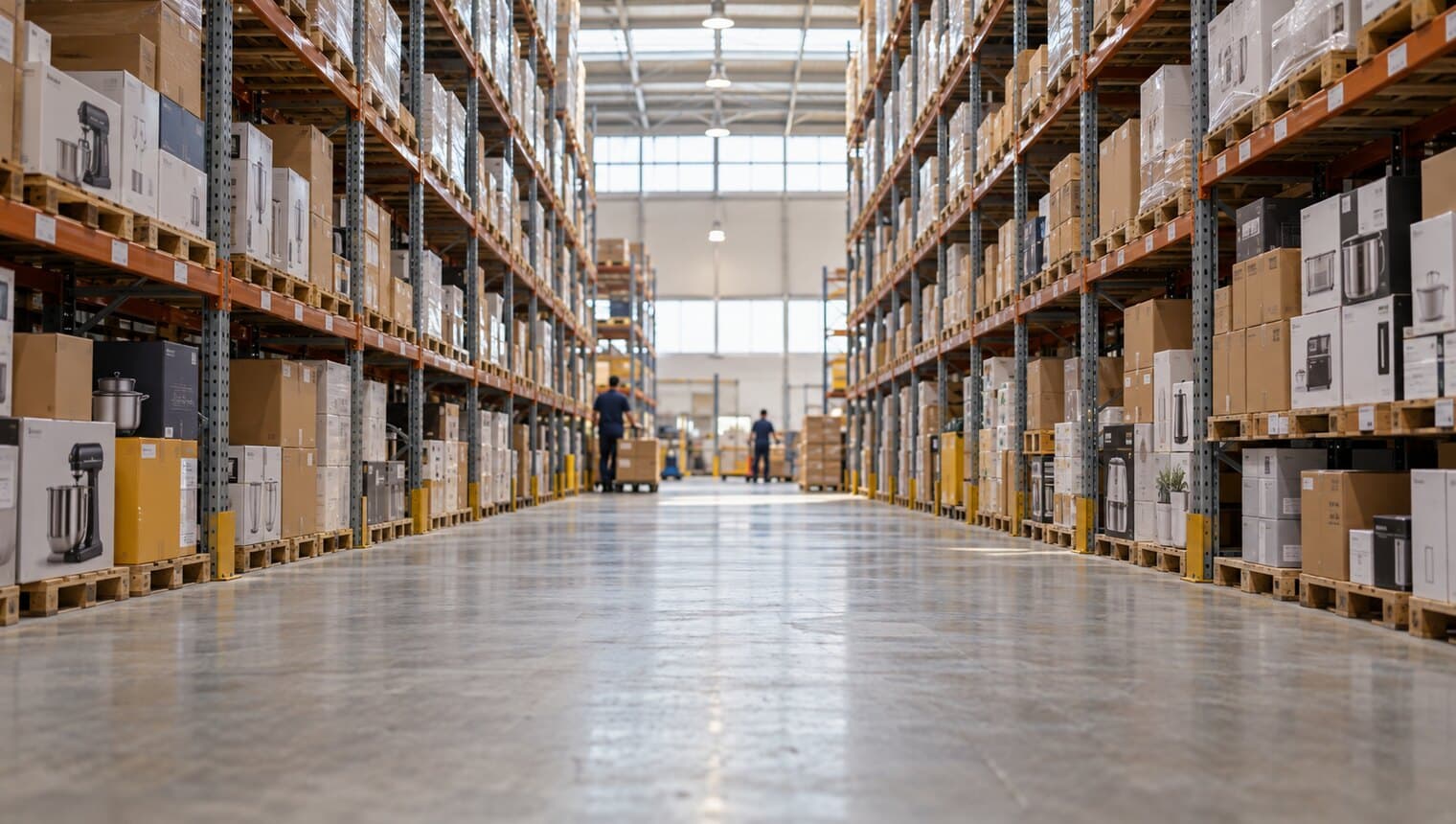

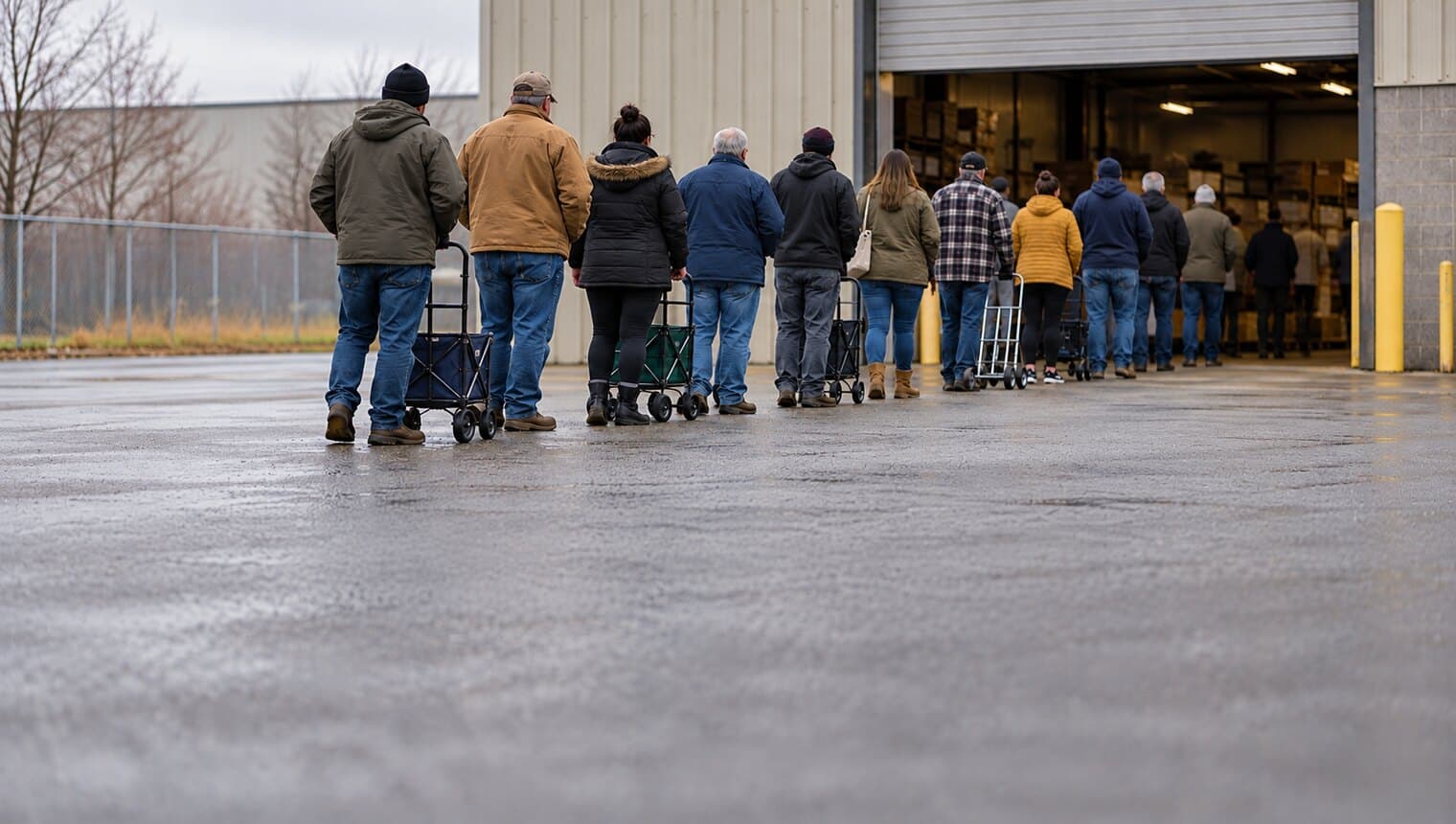
There is a particular kind of Saturday that anyone who has bought from a local liquidation auction will recognize. You won a blender on Tuesday. The pickup window closes Sunday. So you are in the car, thirty or forty minutes out, with a confirmation email and a pickup slot you booked two days ago. There is a line in the parking lot. It is either raining or ninety degrees. Someone ahead of you is loading a sectional.
The blender was eleven dollars. Nobody mentions what the Saturday cost. This article is about that Saturday: why it exists, what it is really worth, and why we decided the only honest way to compete on price was to make it disappear.
Pickup only is a price, written somewhere else
Liquidation auctions are cheap partly because they skip the last and hardest part of retail: getting the thing to you. That cost does not disappear. It moves off their books and onto your calendar. The number on the screen looks great because the real price is paid in miles, hours and a weekend morning you do not get back.
It is worth being fair about why. A warehouse that turns over thousands of lots a week has nowhere to put yours. Shipping a single blender costs them money and staff they do not have. Pickup-only is the model that lets them run lean, and lean is where the low prices come from. The problem is not that the model is dishonest. The problem is that the invoice for it is written in your time, and nobody adds it up. If the model itself is new to you, start with how liquidation actually works.
| Comparison | Pickup-only auction | Bidvana |
|---|---|---|
| What you pay | Your bid, plus a buyer’s premium added at checkout | The price on the listing |
| Getting it home | You drive to the warehouse, by appointment, inside a window of a few days | Delivered to your door within 3 business days, with tracking |
| Miss the window | At many auctions the item is forfeited and the money is gone | There is no window. It comes to you. |
| What you know going in | A manifest line and a stock photo, sold as is | Photos of the exact unit, and on inspected items, five condition scores and the inspector’s notes |
| If it is not as described | Sold as is | Tell us within 3 days of delivery for a full refund, unless it was marked Final sale |
| Your Saturday | Spent in a parking lot | Yours |
The appointment, the window and the forfeit
If you have never bought from a pickup-only auction, the fine print goes roughly like this. You win on a weeknight. You have somewhere between three and seven days to collect. You book a slot, because the dock cannot take everyone at once. You arrive in that slot, show your confirmation, wait while someone finds your lot on a shelf, and load it yourself. Miss the window and, at many houses, the item is resold and your payment is kept.
Each of those rules is reasonable from inside the warehouse. Together they mean you are not really buying a blender. You are buying a blender plus an obligation to be in a specific parking lot on a specific day. People with flexible weekdays and a truck barely notice. People with two jobs, a kid’s soccer schedule or one car shared between two adults notice a lot, and they are the ones a cheap blender was supposed to help.
The math on the drive
Say the warehouse is 25 miles away. That is a 50-mile round trip, which the federal mileage rate values at more than $30 before you have parked. Add an hour and a half of driving and however long the line is. Even at minimum wage, you have now spent more getting the blender than you spent on the blender. And that is one item. Want another next week? Do it again.
The math does not improve much for bigger purchases. A $200 television still costs you the same Saturday, and now you need a vehicle it fits in and a second person to lift it. Pallet buyers can absorb this. A reseller collecting forty items makes the trip worth it. A person who wanted one blender cannot, and most people want one blender.
What we built instead
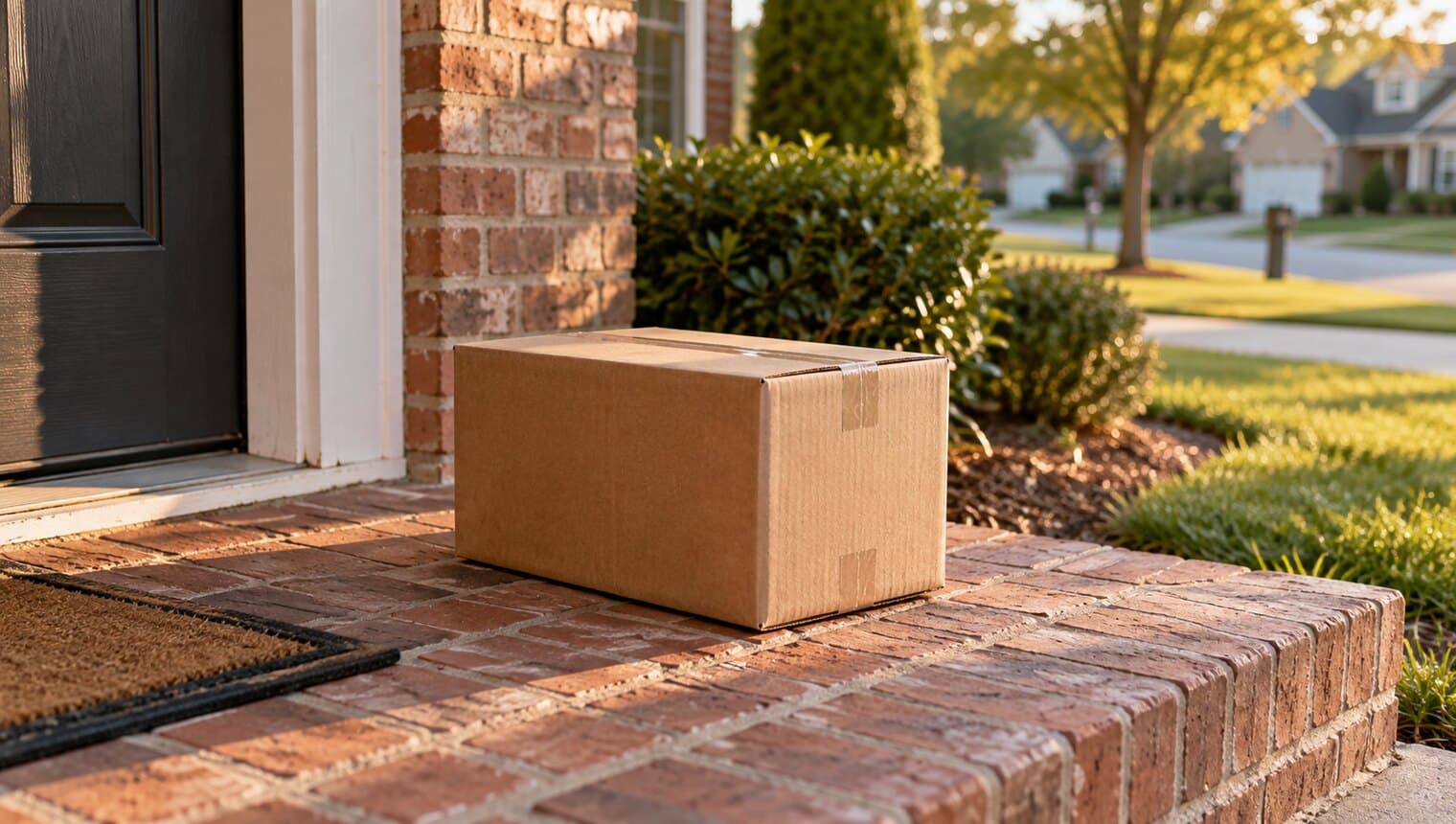
We decided convenience was the product, not an upsell. Every Bidvana order ships to your door. There is no pickup counter, no appointment calendar and no window to miss. Orders leave our warehouse south of Charlotte and arrive within 3 business days with tracking by email. On a busy week some go out in our own van; most go with a carrier. You never have to know which. What happens after you order follows one box the whole way.
Shipping is a flat rate per item by size, so a phone case and a floor lamp do not cost the same to send and we do not pretend they do. It is free once your cart crosses the threshold shown on every product page, however many items are in it. The cheapest way to ship is to fill the cart, and because the cart does not reserve anything or lock a price, you can fill it over a week without anyone rushing you.
Delivery costs us something. A box, a label and a carrier, or a driver and fuel. We think that is our problem to solve, not yours. We would rather earn a little less per item than ask you to spend a Saturday earning it for us.
What delivery changes about how you shop
Once nothing has to be collected, buying one thing becomes normal again. You can buy a single lamp because you need a single lamp. You can buy it at eleven at night and forget about it until the box arrives. You can add a second item on Thursday because the first one got you most of the way to free shipping. None of that works when every purchase comes with a trip.
It also changes what we are allowed to be wrong about. A pickup-only auction sells as is, because once you have driven away there is no practical way back. We deliver, so there is. If an item arrives and it is not what the report said, tell us within 3 days and we arrange the return and a full refund. The only exception is a unit we marked Final sale before you bought it, and that mark is always for a stated reason: a major fault, a crack or a missing core part.
Price and convenience are not a trade
The liquidation industry has trained people to believe you pick one. Cheap means inconvenient, convenient means retail. That is not a law of nature. It is a business model choice, and most of the industry chose the one that was easier for them.
Our prices come from the same returns and overstock everyone else is buying, bought by the truckload and marked down from the item’s actual retail price according to its condition. The savings are still there. The drive is not.
The honest trade-offs
Delivery is not free for us, so it is not free for you on a single small item; the per-item rate is on every listing before you decide. It is not same-day: within 3 business days is the promise, and tracking tells you where the box is. And for now it covers the Charlotte area only, because we would rather deliver well in one metro than badly in five. If you are outside it, the delivery area page takes your email and we will tell you when we reach you.
Those are the costs of doing the hard part ourselves. We think they compare well with a Saturday in a parking lot.